A) 29
B) 30
C) 60
D) 150
E) 342
G) B) and C)
Correct Answer

verified
Correct Answer
verified
A) will dissociate in water,thus increasing the pH.
B) will dissociate in water,thus decreasing the pH.
C) contains primarily nonpolar covalent bonds.
D) has a tetrahedral shape.
F) A) and C)
Correct Answer
verified
Correct Answer
verified
A) a surface coated with a thin film of water
B) a surface coated with a thin film of vinegar (acetic acid)
C) a surface coated with a thin film of vegetable oil
D) a surface coated with a thin film of ammonia (NH3)
F) A) and B)
Correct Answer
verified
Correct Answer
verified
A) 1
B) 8
C) 10
D) 11
E) 16
G) None of the above
Correct Answer
verified
Correct Answer
verified
A) 100 × 1023
B) (6.02/180) × 1023
C) (6.02/100) × 1023
D) (100 × 6.02) × 1023
E) (100/180) × 6.02 × 1023
G) C) and D)
Correct Answer
verified
Correct Answer
verified
A) 4.0 M
B) 10−4 M
C) 104 M
D) 10−10 M
F) A) and C)
Correct Answer
verified
Correct Answer
verified
A) 0
B) 1
C) 2
D) 3
E) 4
G) A) and B)
Correct Answer
verified
Correct Answer
verified
A) 5 times more
B) 32 times more
C) 50,000 times more
D) 10,000 times more
E) 100,000 times more
G) B) and E)
Correct Answer
verified
Correct Answer
verified
A) 1 × 10²³
B) 0) 5 × 6.02 × 1023
C) 92/2 × 6.02 × 1023
D) 0) 5 × 6.02/92 × 1023
E) 6) 02 × 1023
G) A) and B)
Correct Answer
verified
Correct Answer
verified
A) the total number of electrons in the element
B) the total number of protons in the element
C) the total number of neutrons in the element
D) the number of electron orbitals in the element
E) the number of electrons in the valence shell
G) B) and E)
Correct Answer
verified
Correct Answer
verified
A) Seawater will become more acidic,and bicarbonate concentrations will decrease.
B) Seawater will become more alkaline,and carbonate concentrations will decrease.
C) There will be no change in the pH of seawater because carbonate will turn to bicarbonate.
D) Seawater will become more acidic,and carbonate concentrations will decrease.
F) All of the above
Correct Answer
verified
Correct Answer
verified
A) The hydrogen ion concentration is 1 × 10⁻¹⁰ moles per liter of lake water.
B) The hydrogen ion concentration is 4.0 moles per liter of lake water.
C) The hydrogen ion concentration is 1 × 10⁴ moles per liter of lake water.
D) The hydroxyl ion concentration is 1 × 10⁻¹⁰ moles per liter of lake water.
E) The hydroxyl ion concentration is 1 × 10⁻⁴ moles per liter of lake water.
G) All of the above
Correct Answer
verified
Correct Answer
verified
A) 180 × 1023 molecules of glucose.
B) 1 kg of glucose dissolved in 1 L of solution.
C) the largest amount of glucose that can be dissolved in 1 L of solution.
D) 180 grams of glucose.
E) 180 grams of glucose dissolved in 1 L of solution.
G) A) and E)
Correct Answer
verified
Correct Answer
verified
A) The concentration of the reactants equals the concentration of the products.
B) The rate of the forward reaction is equal to the rate of the reverse reaction.
C) All of the reactants have been converted to the products of the reaction.
D) All of the products have been converted to the reactants of the reaction.
F) A) and B)
Correct Answer
verified
Correct Answer
verified
A) Dissolve 1 g of glucose in 1 L of water.
B) Dissolve 180 g of glucose in 1 L of water.
C) Dissolve 180 g of glucose in 180 g of water.
D) Dissolve 180 milligrams (mg) of glucose in 1 L of water.
E) Dissolve 180 g of glucose in 0.8 L of water,and then add more water until the total volume of the solution is 1 L.
G) A) and C)
Correct Answer
verified
Correct Answer
verified
A) 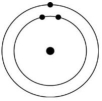
B) 
C) 
D) 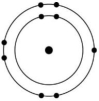
E) 
G) A) and B)
Correct Answer
verified
Correct Answer
verified
A) The concentration of Na+ ion will rise.
B) The concentration of Cl- ion will be 0.1 M.
C) The concentration of undissociated H2O molecules will remain unchanged.
D) The pH of the beaker's contents will be neutral.
E) The pH of the beaker's contents will decrease.
G) A) and D)
Correct Answer
verified
Correct Answer
verified
A) 6) 02 × 1023
B) 3) 01 × 1023
C) 6) 02 × 1024
D) 12.04 × 10²³
E) 6) 02 × 1022
G) A) and C)
Correct Answer
verified
Correct Answer
verified
A) The high surface tension of liquid water keeps the ice on top.
B) The ionic bonds between the molecules in ice prevent the ice from sinking.
C) Ice always has air bubbles that keep it afloat.
D) Hydrogen bonds stabilize and keep the water molecules of ice farther apart than the water molecules of liquid water.
E) The crystalline lattice of ice causes it to be denser than liquid water.
G) B) and C)
Correct Answer
verified
Correct Answer
verified
A) a covalent bond
B) a hydrogen bond
C) an ionic bond
D) a hydrophilic bond
E) a van der Waals interaction
G) A) and B)
Correct Answer
verified
Correct Answer
verified
Showing 61 - 80 of 135
Related Exams