A) Br <Xe < Rb
B) Xe< Br < Rb
C) Br< Rb< Xe
D) Rb< Xe < Br
E) Xe < Rb< Br
G) B) and E)
Correct Answer

verified
Correct Answer
verified
A) Li(g) + e⁻ → Li⁻(g)
B) Li(g) → Li⁺(g) + e⁻
C) Li(g) + e⁻ → Li⁺(g)
D) Li⁺(g) → Li(g) + e⁻
E) Li⁺(g) + e⁻ → Li(g)
G) D) and E)
Correct Answer
verified
Correct Answer
verified
A) 6
B) 7
C) 8
D) 5
E) 4
G) D) and E)
Correct Answer
verified
Correct Answer
verified
A) electrons pair off first, then fill orbitals.
B) electrons fill orbitals of the same energy singly and pair up only after the orbitals are all half filled.
C) orbitals of the same energy level have the same energy.
D) no two electrons in the same atom can have the same four quantum numbers.
E) electrons found in the same orbital must have the same spin.
G) B) and D)
Correct Answer
verified
Correct Answer
verified
A) 28
B) 30
C) 32
D) 65
F) A) and D)
Correct Answer
verified
Correct Answer
verified
A) alkali metal
B) alkaline earth metal
C) transition metal
D) halogen
E) nobel gas
G) All of the above
Correct Answer
verified
Correct Answer
verified
A) Be
B) Br
C) N
D) S
E) Ca
G) B) and E)
Correct Answer
verified
Correct Answer
verified
A) P > As > K
B) As > P > K
C) K > P > As
D) As > K > P
E) K > As > P
G) A) and C)
Correct Answer
verified
Correct Answer
verified
A) Cl-, Ar, Ca2+
B) N, O2-, F-
C) Sc3+, Y3+, La3+
D) Cr, Cr2+, Cr3+
F) All of the above
Correct Answer
verified
Correct Answer
verified
A) 10
B) 13
C) 9
D) 11
E) 12
G) B) and D)
Correct Answer
verified
Correct Answer
verified
A) radium
B) radon
C) rhenium
D) rhodium
F) None of the above
Correct Answer
verified
Correct Answer
verified
A) s orbitals are always lower in energy than p orbitals.
B) electrons spin around the nucleus.
C) you can never know the precise position and energy of an electron.
D) The potential energy of two charges particles depends on their distance.
E) no two electrons in the same atom can have the same four quantum numbers.
G) B) and D)
Correct Answer
verified
Correct Answer
verified
A) 2+
B) 1+
C) 3+
D) 1-
E) 2-
G) All of the above
Correct Answer
verified
Correct Answer
verified
A) chlorine
B) bromine
C) iodine
D) fluorine
F) A) and C)
Correct Answer
verified
Correct Answer
verified
A) Electrons in the 2s orbital are shielded by electrons in the 2p.
B) There are more nodes found in the 2s orbital.
C) Electrons in the 2s orbital can penetrate the 1s orbital and be closer to the nucleus.
D) The larger number of electrons found in the 2p orbital leads to greater repulsion.
E) The shape of the orbital ultimately determines the energy of the electrons.
G) B) and E)
Correct Answer
verified
Correct Answer
verified
A) C
B) Ce
C) Cl
D) Co
F) A) and D)
Correct Answer
verified
Correct Answer
verified
A) 
B) 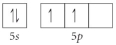
C) 
D) 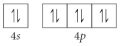
E) 
G) A) and D)
Correct Answer
verified
Correct Answer
verified
A) Cs
B) Rb
C) K
D) Na
E) Li
G) A) and E)
Correct Answer
verified
Correct Answer
verified
A) an atom that has lost an electron
B) an atom that has gained an electron
C) an atom that has lost a neutron and a proton.
D) an atom that has gained a neutron and a proton.
F) A) and C)
Correct Answer
verified
Correct Answer
verified
A) Li
B) F
C) Rb
D) V
E) Zn
G) B) and C)
Correct Answer
verified
Correct Answer
verified
Showing 41 - 60 of 144
Related Exams