Filters
Question type

Study Flashcards

An equilibrium mixture of CO,O2 and CO2 at a certain temperature contains 0.0010 M CO2 and 0.0015 M O2.At this temperature,Kc equals 1.4 × 10² for the reaction: 2 CO(g) + O2(g) ⇌ 2 CO2(g) . What is the equilibrium concentration of CO?


A) 4.8 × 10⁻⁶ M
B) 2.2 × 10⁻³ M
C) 9.3 × 10⁻² M
D) 3.1 × 10⁻¹ M

E) C) and D)
F) A) and C)

Correct Answer

verifed

verified

The reaction below has a Kp value of 41.What is the value of Kc for this reaction at 400 K? N2(g) + 3 H2(g) ⇌ 2 NH3(g)


A) 3.8 × 10⁻²
B) 4.4 × 10⁴
C) 26
D) 2.3 × 10⁻⁵
E) 41

F) A) and B)
G) B) and D)

Correct Answer

verifed

verified

Give the direction of the reaction,if K >> 1.


A) The forward reaction is favored.
B) The reverse reaction is favored.
C) Neither direction is favored.
D) If the temperature is raised, then the forward reaction is favored.
E) If the temperature is raised, then the reverse reaction is favored.

F) A) and B)
G) C) and E)

Correct Answer

verifed

verified

Consider the following reaction: CO2(g) + C(graphite) ⇌ 2 CO(g) A reaction mixture initially contains 0.56 atm CO2 and 0.32 atm CO.Determine the equilibrium pressure of CO if Kp for the reaction at this temperature is 2.25.


A) 0.83 atm
B) 0.31 atm
C) 0.26 atm
D) 0.58 atm
E) 0.42 atm

F) A) and C)
G) B) and D)

Correct Answer

verifed

verified

In a reaction mixture containing reactants and products,each at a concentration of 1M,what is the value of Q?


A) -1
B) 1
C) ∞
D) 0
E) It cannot be determined without concentrations.

F) B) and D)
G) B) and E)

Correct Answer

verifed

verified

At a certain temperature,nitrogen and hydrogen react to form ammonia: N2(g) + 3 H2(g) ⇌ 2 NH3(g) . When initial amounts of N2,H2,and NH3 are mixed,the concentration of NH3 increases.Which statement below is TRUE?


A) Kc < Q
B) Kc > Q
C) Kc = Q
D) More information is needed to make a statement about Kc.

E) B) and C)
F) A) and B)

Correct Answer

verifed

verified

The equilibrium constant is given for two of the reactions below.Determine the value of the missing equilibrium constant. A(g) + 2B(g) ⇌ AB2(g) Kc = 59 AB2(g) + B(g) ⇌ AB3(g) Kc = ? A(g) + 3B(g) ⇌ AB3(g) Kc = 478


A) 3.5 × 10⁻⁵
B) 2.8 × 10⁴
C) 8.1
D) 0.12
E) 89

F) A) and C)
G) A) and B)

Correct Answer

verifed

verified

Express the equilibrium constant for the following reaction. 2 N2(g) + 6 H2(g) ⇔ 4 NH3(g)


A) K = Express the equilibrium constant for the following reaction. 2 N<sub>2</sub>(g) + 6 H<sub>2</sub>(g) ⇔ 4 NH<sub>3</sub>(g)  A)  K =   B)  K =   C)  K =   D)  K =   E)  K =
B) K = Express the equilibrium constant for the following reaction. 2 N<sub>2</sub>(g) + 6 H<sub>2</sub>(g) ⇔ 4 NH<sub>3</sub>(g)  A)  K =   B)  K =   C)  K =   D)  K =   E)  K =
C) K = Express the equilibrium constant for the following reaction. 2 N<sub>2</sub>(g) + 6 H<sub>2</sub>(g) ⇔ 4 NH<sub>3</sub>(g)  A)  K =   B)  K =   C)  K =   D)  K =   E)  K =
D) K = Express the equilibrium constant for the following reaction. 2 N<sub>2</sub>(g) + 6 H<sub>2</sub>(g) ⇔ 4 NH<sub>3</sub>(g)  A)  K =   B)  K =   C)  K =   D)  K =   E)  K =
E) K = Express the equilibrium constant for the following reaction. 2 N<sub>2</sub>(g) + 6 H<sub>2</sub>(g) ⇔ 4 NH<sub>3</sub>(g)  A)  K =   B)  K =   C)  K =   D)  K =   E)  K =

F) C) and D)
G) A) and D)

Correct Answer

verifed

verified

The Kp for the reaction below is 1.49 × 10⁸ at 100.0°C: CO(g) + Cl2(g) → COCl2(g) In an equilibrium mixture of the three gases,PCO = The K<sub>p</sub> for the reaction below is 1.49 × 10<sup>8</sup> at 100.0°C: CO(g) + Cl<sub>2</sub>(g) → COCl<sub>2</sub>(g)  In an equilibrium mixture of the three gases,P<sub>CO</sub> =   = 4.44 × 10<sup>-4</sup> atm.The partial pressure of the product,phosgene (COCl<sub>2</sub>) ,is ________ atm. A)  2.94 × 10<sup>1</sup> B)  7.56 × 10<sup>14</sup> C)  1.32 × 10<sup>-15</sup> D)  6.62 × 10<sup>4</sup> E)  3.33 × 10<sup>11</sup> = 4.44 × 10⁻⁴ atm.The partial pressure of the product,phosgene (COCl2) ,is ________ atm.


A) 2.94 × 101
B) 7.56 × 10¹⁴
C) 1.32 × 10⁻¹⁵
D) 6.62 × 10⁴
E) 3.33 × 10¹¹

F) B) and E)
G) C) and D)

Correct Answer

verifed

verified

A

The following reaction is exothermic.Which change will shift the equilibrium to the left? 2 SO2(g) + O2(g) ⇌ 2 SO3(g)


A) raising the temperature
B) adding SO3
C) removing O2
D) all of the above
E) none of the above

F) None of the above
G) B) and D)

Correct Answer

verifed

verified

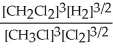
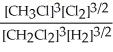
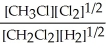
Express the equilibrium constant for the following reaction. 3 CH3Cl(g) + 3/2 Cl2(g) ⇔ 3 CH2Cl2(g) + 3/2 H2(g)


A) K = Express the equilibrium constant for the following reaction. 3 CH<sub>3</sub>Cl(g) + 3/2 Cl<sub>2</sub>(g) ⇔ 3 CH<sub>2</sub>Cl<sub>2</sub>(g) + 3/2 H<sub>2(g) </sub> A)  K =   B)  K =   C)  K =   D)  K =   E)  K =
B) K = Express the equilibrium constant for the following reaction. 3 CH<sub>3</sub>Cl(g) + 3/2 Cl<sub>2</sub>(g) ⇔ 3 CH<sub>2</sub>Cl<sub>2</sub>(g) + 3/2 H<sub>2(g) </sub> A)  K =   B)  K =   C)  K =   D)  K =   E)  K =
C) K = Express the equilibrium constant for the following reaction. 3 CH<sub>3</sub>Cl(g) + 3/2 Cl<sub>2</sub>(g) ⇔ 3 CH<sub>2</sub>Cl<sub>2</sub>(g) + 3/2 H<sub>2(g) </sub> A)  K =   B)  K =   C)  K =   D)  K =   E)  K =
D) K = Express the equilibrium constant for the following reaction. 3 CH<sub>3</sub>Cl(g) + 3/2 Cl<sub>2</sub>(g) ⇔ 3 CH<sub>2</sub>Cl<sub>2</sub>(g) + 3/2 H<sub>2(g) </sub> A)  K =   B)  K =   C)  K =   D)  K =   E)  K =
E) K = Express the equilibrium constant for the following reaction. 3 CH<sub>3</sub>Cl(g) + 3/2 Cl<sub>2</sub>(g) ⇔ 3 CH<sub>2</sub>Cl<sub>2</sub>(g) + 3/2 H<sub>2(g) </sub> A)  K =   B)  K =   C)  K =   D)  K =   E)  K =

F) A) and C)
G) B) and E)

Correct Answer

verifed

verified

A

The equilibrium constant is equal to 5.00 at 1300 K for the reaction: 2 SO2(g) + O2(g) ⇌ 2 SO3(g) . If initial concentrations are [SO2] = 1.20 M,[O2] = 0.45 M,and [SO3] = 1.80 M,the system is


A) at equilibrium.
B) not at equilibrium and will remain in an unequilibrated state.
C) not at equilibrium and will shift to the left to achieve an equilibrium state.
D) not at equilibrium and will shift to the right to achieve an equilibrium state.

E) All of the above
F) A) and B)

Correct Answer

verifed

verified

In a reaction mixture containing only products,what is the value of Q?


A) -1
B) 1
C) ∞
D) 0
E) It cannot be determined without concentrations.

F) C) and D)
G) A) and E)

Correct Answer

verifed

verified

Express the equilibrium constant for the following reaction. 10 NH3(g) ⇔ 5 N2(g) + 15 H2(g)


A) K = Express the equilibrium constant for the following reaction. 10 NH<sub>3</sub>(g) ⇔ 5 N<sub>2</sub>(g) + 15 H<sub>2</sub>(g)  A)  K =   B)  K =   C)  K =   D)  K =   E)  K =
B) K = Express the equilibrium constant for the following reaction. 10 NH<sub>3</sub>(g) ⇔ 5 N<sub>2</sub>(g) + 15 H<sub>2</sub>(g)  A)  K =   B)  K =   C)  K =   D)  K =   E)  K =
C) K = Express the equilibrium constant for the following reaction. 10 NH<sub>3</sub>(g) ⇔ 5 N<sub>2</sub>(g) + 15 H<sub>2</sub>(g)  A)  K =   B)  K =   C)  K =   D)  K =   E)  K =
D) K = Express the equilibrium constant for the following reaction. 10 NH<sub>3</sub>(g) ⇔ 5 N<sub>2</sub>(g) + 15 H<sub>2</sub>(g)  A)  K =   B)  K =   C)  K =   D)  K =   E)  K =
E) K = Express the equilibrium constant for the following reaction. 10 NH<sub>3</sub>(g) ⇔ 5 N<sub>2</sub>(g) + 15 H<sub>2</sub>(g)  A)  K =   B)  K =   C)  K =   D)  K =   E)  K =

F) A) and E)
G) A) and C)

Correct Answer

verifed

verified

Chemical equilibrium is the result of


A) all of the reactants being converted into products.
B) stoppage of further reaction.
C) formation of products equal in mass to the mass of the reactants.
D) opposing reactions attaining equal rates.
E) a loss of pressure in the system.

F) B) and E)
G) B) and C)

Correct Answer

verifed

verified

What is Δn for the following equation in relating Kc to Kp? SO3(g) + NO(g) ⇌ SO2(g) + NO2(g)


A) 0
B) -1
C) -2
D) 2
E) 1

F) D) and E)
G) A) and B)

Correct Answer

verifed

verified

Can the Kp and Kc for a reaction ever have the same value? Why or why not?

Correct Answer

verifed

verified

Yes,they can have the same value.Since K...

View Answer

Identify the change that will always shift the equilibrium to the right.


A) remove reactant
B) increase product
C) remove product
D) increase pressure
E) increase volume

F) A) and D)
G) A) and C)

Correct Answer

verifed

verified

C

What is △n for the following equation in relating Kc to Kp? 2 Rb(s) + 2 H2O(l) ⇌ 2 RbOH(aq) + H2(g)


A) 3
B) -1
C) -2
D) 2
E) 1

F) C) and D)
G) B) and D)

Correct Answer

verifed

verified

At a certain temperature,Kc equals 1.4 × 10² for the reaction: 2 CO(g) + O2(g) ⇌ 2 CO2(g) . If a 3.50-L flask contains 0.400 mol of CO2 and 0.100 mol of O2 at equilibrium,how many moles of CO are also present in the flask?


A) 0.700 mol
B) 0.200 mol
C) 0.107 mol
D) 0.0114 mol

E) A) and B)
F) B) and C)

Correct Answer

verifed

verified

Showing 1 - 20 of 141

Related Exams

Show Answer